


Fitting underglow lights to a car is legal in the UK, but the rules are specific. To remain on the right side of the law, any modification must not distract other road users, imitate emergency vehicles, or create a dazzling glare.
This guide explains the regulations in straightforward terms, ensuring you know exactly what is and is not permitted.
Understanding UK Underglow Laws
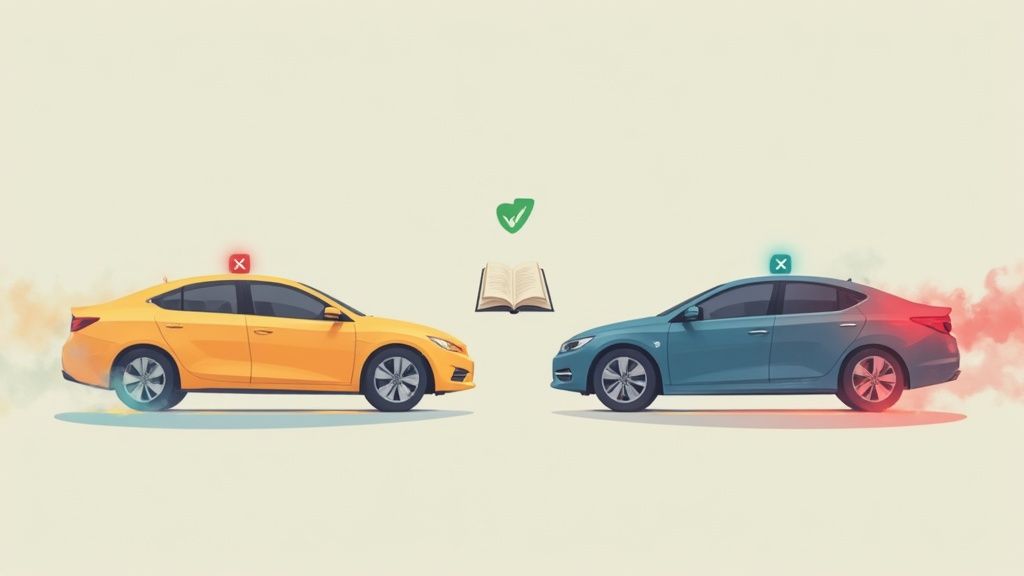
The question "is underglow legal?" does not have a simple yes or no answer. No single piece of legislation bans underglow outright. Instead, its use is governed by existing vehicle lighting regulations that prioritise safety on public roads.
At its core, the law is about preventing danger. Any lighting modification must not compromise the safety of the driver or others. The regulations are less concerned with the lights themselves and more focused on the effect they have on the road.
The Three Core Rules
Your underglow setup must be designed to avoid three key problems: distraction, imitation, and dazzle. If you meet these three criteria, your installation is almost certainly compliant. The ideal setup creates a soft halo of light under the car, with no visible bulbs and a permitted colour.
- No Distractions: The lights cannot be so bright or animated that they draw other drivers' attention from the road. For this reason, any flashing, strobing, or rapidly changing colour patterns are prohibited.
- No Imitations: The colours blue and red are strictly reserved for emergency services. Using them on a personal vehicle could cause serious confusion during a real emergency, and the police take this matter very seriously.
- No Dazzle: This is a crucial point. The light source itself—the LED strip or bulbs—must be hidden from direct view. The aim is to see the glow on the ground, not a direct beam of light that could impair another driver's vision.
The legal framework is primarily defined by the Road Vehicles Lighting Regulations 1989. This is not just a theoretical issue. In 2020, the Department for Transport found that 1.8% of all vehicles stopped for roadside checks had illegal lighting modifications, with underglow being a common reason. Of those, 63% were stopped for using banned colours such as blue, red, or green. You can explore additional insights on underglow regulations for a complete picture of compliance.
A useful rule of thumb is 'glow, not show.' If another driver can see the actual bulb or LED strip from their vehicle, your installation is almost certainly illegal, regardless of the colour.
To provide a clearer picture, here is a quick summary of what is allowed and what is not.
UK Underglow Legality Quick Reference
| Feature | Permitted | Prohibited |
|---|---|---|
| Visibility | Indirect glow on the road surface. | Direct light source (bulbs/LEDs) visible. |
| Colours | Subtle, single static colours (white, amber). | Red, blue, green, or any colour resembling official signals. |
| Effects | Static, solid light. | Flashing, strobing, pulsing, or colour-chasing effects. |
| Placement | Underneath the chassis, away from front/rear. | Near headlights, brake lights, or indicators. |
This table should help you quickly assess whether a particular underglow kit is likely to be road-legal in the UK.
Permitted vs Prohibited Colours
Choosing the right colour is one of the most important decisions you will make. The regulations are very clear about which colours are reserved for specific uses on a vehicle, and underglow must adhere to these rules.
Generally, subtle static colours are the safest option. While white or amber may be acceptable, this can sometimes be at the discretion of the police officer who stops you. To avoid ambiguity, many owners choose colours that have no official function.
Some colours, however, are completely forbidden. Using any red, blue, or green lights that are visible from the outside of your vehicle is the most direct way to be stopped and fined.
The UK Road Vehicles Lighting Regulations
To fully understand why some underglow kits will cause legal problems, it is necessary to look beyond a simple list of rules. The foundation of all vehicle lighting law in the UK is The Road Vehicles Lighting Regulations 1989. While the document is dated, its principles are centred on one thing: road safety.
These rules function as the official language for how vehicles communicate with light. Every standard lamp on your car has a specific purpose. The red of your brake lights means "stopping," and the amber of your indicators means "turning." It is a universal language. Any modification you make, such as adding car under lights, must not interfere with that language.
The legislation does not exist to prevent you from personalising your vehicle. It exists to prevent any light that could confuse, distract, or endanger other people on the road. This is where you encounter important legal phrases.
What Does “Undue Distraction” Mean?
In legal terms, 'undue distraction' is any light that is not a required part of the car's signalling system and could pull another driver's focus from the road. This could be a light that is too bright, an unusual colour, or anything that flashes, strobes, or chases.
Imagine driving on a dark motorway when a car passes with a pulsing rainbow of lights beneath it. Your eyes will be drawn to it, even for a moment. That is the exact moment of distraction the law is designed to prevent.
Then there is the concept of 'dazzle'. This simply means any light so bright that it interferes with the vision of other drivers, cyclists, or pedestrians. This is precisely why the regulations are clear that the direct light source—the actual LED strip or bulb—cannot be visible. You are permitted the glow, not the glare.
The core principle is simple: your car’s lights should help you see and inform others of your intentions. Any cosmetic lighting must follow the rules and not interfere with these critical safety functions.
The Logic Behind Colour Restrictions
The strict rules about certain colours are not arbitrary. They exist to keep the on-road language clear, consistent, and instantly understandable for every driver. This system allows us to react to hazards immediately.
- Red Lights: Red is reserved for the rear of a vehicle only. It universally means "brakes" or "rear of car." Placing a red light on the front or side creates dangerous confusion for anyone trying to determine your direction of travel.
- Blue Lights: This is a significant one. Blue is for emergency services only. When we see a flashing blue light, our instinct is to move out of the way. Using blue on your personal car could cause other drivers to panic, or worse, make them complacent when a real emergency vehicle is trying to get through.
- Green Lights: While less common, green lights are used by medical practitioners, such as doctors on an emergency call. A visible green light on your car could easily be mistaken for an on-call professional, causing unnecessary confusion.
Underglow has become more popular in recent years, particularly with younger drivers. A 2018 survey showed that 27% of car owners aged 18-35 had fitted aftermarket lighting. The concerning part is that it also found that only 41% of them were aware of these vital colour restrictions, which indicates a significant knowledge gap. You can find more details on the popularity and awareness of underglow laws. This proves that understanding the rules is not just about avoiding a fine; it is about keeping everyone safe.
Once you understand the 'why' behind the regulations, making smart, legal choices for your car becomes much simpler. The law is about creating a predictable environment on the road, and a compliant modification is one that respects that.
The Consequences of Non-Compliant Underglow Lights
If you have fitted underglow that bends the rules, what are the potential consequences? It is tempting to view it as a minor issue, but the repercussions can be more serious than a simple warning. There can be real impacts on your finances, your licence, and your car's roadworthiness.
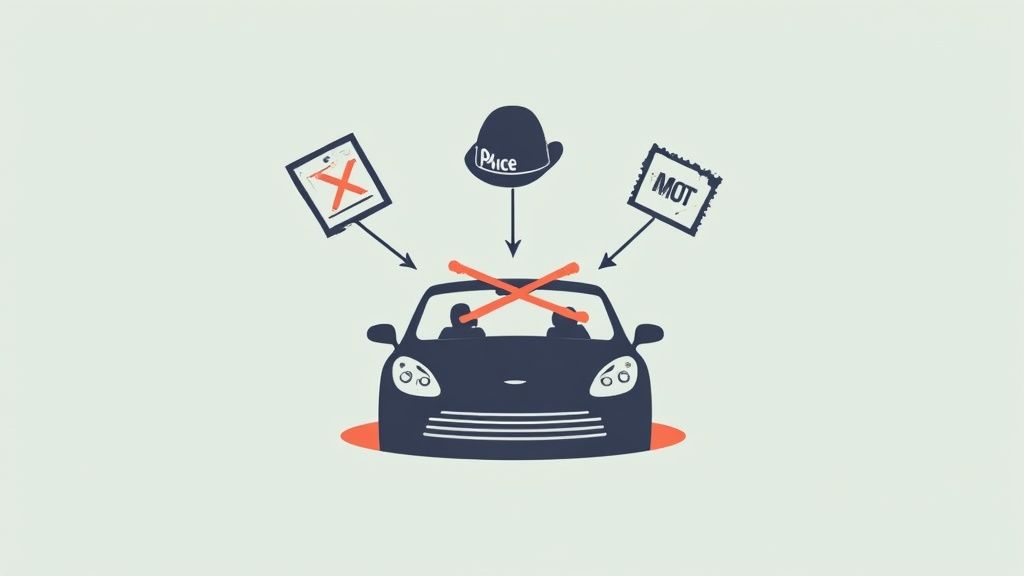
If a police officer stops you for your lights, a few things could happen. The most common outcome is a Fixed Penalty Notice (FPN), which is an on-the-spot fine.
You can expect the fine for this type of lighting offence to be in the region of £50 to £100. While not a huge sum, it is an avoidable cost and a reminder of the rules.
Points on Your Licence and Insurance Issues
If the violation is more serious, or if you are a repeat offender, the situation can escalate beyond a fine. The police can issue points on your driving licence, especially for modifications they deem dangerous—such as lights that flash red and blue or are bright enough to dazzle other drivers.
Receiving points is significant because they remain on your record and have a knock-on effect, particularly with your car insurance. Insurers view points as an indicator of risky behaviour, and your premiums will almost certainly increase for the next few years.
Furthermore, you must declare all modifications to your insurance company. If you fail to mention the underglow kit and later need to make a claim, they could declare your policy void. This means they would not pay out.
The Vehicle Defect Rectification Notice
Often, for a less severe issue, an officer might use their discretion and issue a Vehicle Defect Rectification Notice (VDRN) instead. This is not a fine; it is an official order to correct the problem.
A VDRN can be considered a formal warning. It gives you a deadline, usually 14 days, to remove the illegal lights and then present your car at a police station to prove you have complied. If you ignore it, you will face prosecution and a much larger fine.
This is a common-sense approach that gives you a chance to rectify the situation without an immediate financial penalty, especially if you were genuinely unaware your setup was illegal. However, it is a formal warning that must be taken seriously.
Failing Your MOT Test
Your annual MOT is where any questionable modifications are likely to be identified. Illegal lighting is a common reason for a failure, and even if your underglow is switched off during the test, its presence can be enough to cause a problem.
An MOT tester will check for a few key things:
- Incorrect Colours: If your kit is capable of displaying a forbidden colour like red or blue, it is an instant fail.
- Insecure Fitting: Light strips or wiring hanging loose under the car are a clear safety hazard.
- Potential for Distraction: The examiner can use their judgement. If they believe the lights are positioned in a way that could distract or dazzle others, your car will fail.
A failed MOT certificate means your car is not legally roadworthy. You cannot drive it until the problems are fixed and it passes a re-test, resulting in unexpected costs and inconvenience. This is another reason why getting the installation right from the start is so important.
Best Practices for Safe and Legal Installation
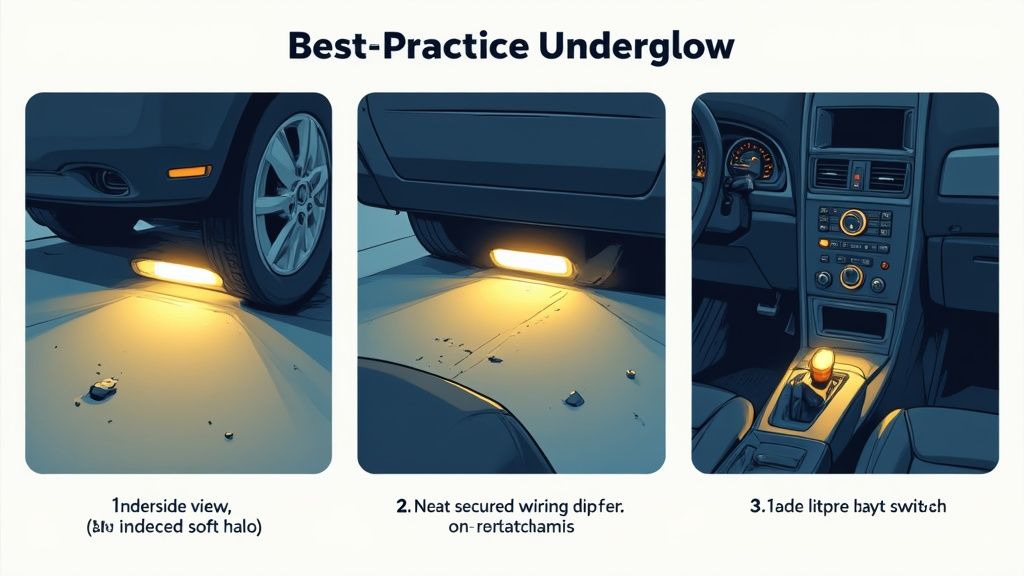
Knowing the rules is one thing, but applying them during installation is how you ensure your underglow setup is road-legal and safe. A professional, thoughtful fitment is not just about compliance; it is about protecting your car, your driving record, and the kit itself.
The primary rule is to create an indirect glow. This means the LED strips or tubes—the actual light source—must be completely hidden. Other drivers should see the light reflecting off the ground, creating the classic halo effect, not the bulbs themselves.
This is the difference between a tasteful uplighter in a room and a bare bulb hanging from the ceiling. One creates atmosphere; the other is a distracting glare. That is the distinction an officer or an MOT tester will be looking for.
Securing the Installation
A tidy and secure fit is non-negotiable. Dangling wires or loose light strips are not just untidy—they are dangerous. A wire could snag on road debris or become entangled in your suspension, and a strip that falls off could cause a serious hazard for the driver behind you.
When fitting your kit, ensure every component is fastened securely to the car’s chassis. Use good-quality clips and cable ties to route all wiring well away from anything that gets hot (like the exhaust) or anything that moves (like steering and suspension parts). This simple step prevents damage and reduces the risk of electrical faults.
The quality of your installation is important. A tidy, well-secured setup is less likely to attract unwanted attention from police or fail an MOT inspection, as it demonstrates a responsible approach to vehicle modification.
Opting for a professional installation with a high-quality kit is always the best choice. Modern kits, such as a good app-controlled underglow kit, typically include better mounting hardware and more durable components, making a safe and secure fitment much easier to achieve.
Wiring and Electrical Safety
Correct wiring is crucial for preventing electrical issues that could damage your kit or your car’s electronics. The most important rule is to ensure your underglow system is completely independent of your car's factory-fitted lights.
Here are the key electrical safety steps to follow:
- Use a Fused Power Source: Always connect your kit to a fused circuit. This is your safety measure against power surges or short circuits. Never wire anything directly to the battery without a fuse in line.
- Make Professional Connections: Take the time to solder connections properly and seal them with heat-shrink tubing. This prevents moisture ingress, which is the main cause of corrosion and short circuits.
- Do Not Touch Factory Wiring: Never splice into the wiring for your headlights, brake lights, or indicators. Interfering with these critical systems is a guaranteed MOT failure and can cause them to malfunction when you need them most.
The Importance of a Kill Switch
Installing a dedicated on/off switch for your underglow—often called a kill switch—inside the cabin provides ultimate control. It is the most effective way to ensure compliance.
With a switch at your fingertips, you can instantly turn everything off the moment you enter a public road. This removes all doubt if you are ever stopped and questioned. You can enjoy all the colours and patterns at a car show on private land, then flick a switch and be 100% road-legal for the drive home.
Ultimately, a safe and legal installation comes down to attention to detail. Hide the bulbs, secure the hardware, wire it safely, and fit a kill switch. By doing all that, you can enjoy your car’s new look without worrying about being stopped.
How Police and the Public Perceive Underglow
Fitting underglow to your car is about more than just knowing the rules; it is about understanding how you will be perceived on the road. Even a perfectly legal, professionally installed kit can attract unwanted attention. The fact is that underglow places your vehicle in the modified car scene, which sometimes receives more scrutiny from both the police and the public.
This does not mean having underglow is an admission of wrongdoing. However, it is wise to accept that a car with a soft glow underneath is more noticeable than one without. This visibility can sometimes prompt an officer to take a closer look at other potential modifications or check the general roadworthiness of your vehicle.
An officer's decision to stop a driver is based on the overall picture. A car with a subtle, static white glow driving quietly through a town is very different from one with flashing, brightly coloured lights accelerating from a late-night car meet. Context is important.
Why You Might Be Stopped
Police officers are trained to spot anything out of the ordinary, as it can sometimes be an indicator of a more serious issue. Your underglow might be completely compliant, but it can still be the initial trigger that catches an officer's eye.
Here are a few common reasons an officer might decide to speak with you:
- Mistaken Identity: From a distance, especially at night, certain shades of amber or white can be misinterpreted. An officer might stop you simply to get a closer look and confirm the colour is compliant.
- Guilt by Association: It is an unfortunate reality that the modified car scene is sometimes unfairly linked to activities like street racing or excessive noise. If you are in an area known for these issues, your underglow might lead police to suspect your involvement.
- The Basis for a Wider Check: Sometimes, the lights provide a legitimate reason to initiate a stop. Once you are pulled over, an officer might then take the opportunity to perform a broader check of your vehicle for things like tyre tread depth, exhaust noise, or illegal window tints.
While your lights may be perfectly legal, they make you and your vehicle stand out. This means your driving, the overall condition of your car, and where and when you drive all become more important if you wish to avoid unwanted attention.
What Other Drivers Think
It is not just the police you need to consider. The perception of other drivers also matters, largely because public opinion can eventually shape road safety policy and how rules are enforced. For many people, any kind of aftermarket lighting is seen as a pointless and distracting modification.
There is data to support this. A major 2019 study by the UK's Institute of Advanced Motorists (IAM) found that 78% of drivers believed underglow lights should be completely banned on public roads, citing distraction as their main concern. The same study highlighted a 40% increase in complaints to local councils about vehicles with underglow between 2015 and 2019. You can read more about these findings on underglow legality to see the trend for yourself.
This shows a real divide between the enthusiast community, who see underglow as a form of self-expression, and a large portion of the public, who often see it as a nuisance or a danger. Being a responsible owner means being aware of this. By keeping your lights subtle, compliant, and using them thoughtfully, you are not just staying on the right side of the law—you are also helping to build a better image for the modified car community.
Frequently Asked Questions About Underglow Laws
The rules around underglow can feel ambiguous. There are grey areas and specific situations to consider. To provide clarity, here are some direct answers to the most common questions.
This flowchart offers a simple way to assess whether your setup is likely to be legal or attract unwanted attention.
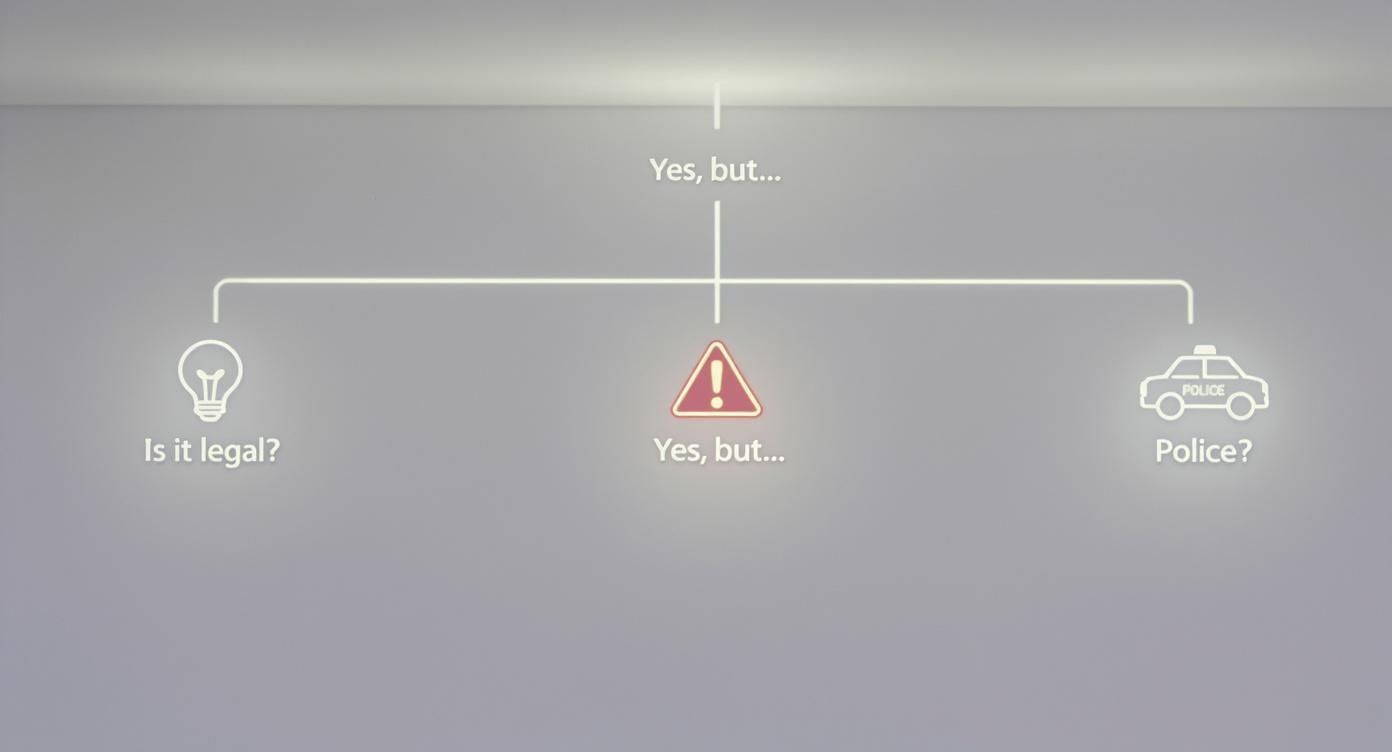
The key point is that while you can have legal underglow, it is always conditional. Having it fitted almost always increases the chances of being stopped for a closer inspection.
Can I Use Multicolour RGB Underglow Lights Legally?
Yes, but with serious restrictions when your vehicle is moving. If you are driving on a public road, your lights must be locked to a single, static, legally permitted colour.
This means no red showing at the front, no white at the rear, and definitely no colours reserved for emergency services, such as blue. Any flashing, strobing, or colour-shifting effects are prohibited while driving on a public highway.
The most sensible way to enjoy these features is to reserve them for when you are stationary on private land, such as at a car meet. Ensure you can switch them to a compliant static colour—or turn them off completely—before you return to the road.
Will Underglow Lights Cause My Car to Fail Its MOT?
They can, and this is a common problem. The MOT test checks that every lamp on your vehicle is secure, working correctly, and showing the correct colour.
If your underglow kit displays a forbidden colour, is not securely attached, or is set up in a way that could dazzle or distract other drivers, it is an instant failure.
It is crucial to remember that even if the lights are switched off during the test, an examiner can still fail the vehicle if the wiring looks unsafe or the installation itself is of poor quality. Your best option is to ensure the entire system is off and appears neat before you take it in.
Are the Rules Different When Parked Versus Driving?
Yes, the difference is significant, and it depends on your location. The strictest regulations apply the moment you are driving on a public road.
When you are parked on private property—such as your own driveway or a designated area at a car show—you have much more freedom. In these settings, you can generally display any colour or effect you like without violating road vehicle laws.
However, the moment your wheels touch a public road, the Road Vehicles Lighting Regulations are back in full force. This means the lights must be either off or switched to a compliant, static mode. There are no exceptions.
Do I Need to Inform My Insurance Provider About Underglow?
You must inform your insurance provider about any modifications, and this includes an underglow kit. Failure to do so is a certain way to invalidate your policy.
If you are involved in an accident and your insurer discovers undeclared modifications, they could have grounds to refuse your claim. This could leave you with a substantial bill.
Some insurers will simply adjust your premium to cover the modification, while others may refuse to cover a modified car at all. It is vital to have that conversation before you fit the lights to understand how it affects your policy and ensure you are properly covered. For more general questions about our products or policies, feel free to check out our comprehensive frequently asked questions page for more information.
What Is the Safest Colour for Underglow?
There is no single colour that is guaranteed to be 100% safe, as much depends on the discretion of the police officer who sees it. That said, subtle, static colours that do not resemble official vehicle lights are your safest option.
Colours such as a soft, static white or amber are often seen as more acceptable, but only if they produce an indirect glow where the bulb or LED strip itself is not visible.
Even with a "safe" colour, the installation must be perfect. The primary rule is to avoid any colour that could possibly be mistaken for a brake light (red), an indicator (flashing amber), or an emergency vehicle (blue or green).
Are There Any Underglow Kits That Are Guaranteed to Be Legal?
No. No manufacturer can guarantee their kit is road-legal in the UK. This is because the legality has very little to do with the kit itself and everything to do with how you install and use it.
A high-quality kit might be designed with compliance in mind, perhaps with a kill switch or an easy way to select static colours. But if that same kit is wired poorly or used to show flashing blue lights on the M1, it is illegal.
Ultimately, the responsibility is on you, the owner, to ensure your setup adheres to the Road Vehicles Lighting Regulations whenever you are driving in public.