


To be direct: are wireless chargers safe? The short answer is yes.
When you buy from a trusted brand and the charger has the right certifications, it is completely safe for both you and your phone. The technology itself is not the issue; safety comes down to the quality of the product. A good charger is a safe charger.
Your Guide To Wireless Charger Safety
There is no denying the convenience of placing your phone on a pad and watching it charge. It is only natural, however, to wonder about the safety of sending power through the air. This guide provides a clear, evidence-based answer, helping you spot the difference between a reliable charger and a risky one.
We will cover everything that makes a wireless charger safe, starting with personal health and moving on to what is best for your device. Understanding these basics is the first step to charging with complete peace of mind.
Key Safety Considerations
We will break down the three most important areas that determine if a wireless charger is safe for daily use. Think of these as the pillars of wireless charging safety, which we will explore in more detail.
-
Your Health and Safety: We will address the main questions about electromagnetic fields (EMF) and explain why the non-ionising radiation from certified chargers is well within safe UK limits.
-
Your Phone and Its Battery: We will look at how wireless charging affects your phone’s battery and internal components, highlighting why managing heat is so important.
-
Official Certifications and Standards: You will learn what to look for, such as the Qi certification and UKCA symbol. These are not just logos; they are your guarantee that a product has passed rigorous safety and performance tests.
To give you a quick overview, here are the essential safety factors to keep in mind.
Key Safety Factors at a Glance
| Safety Aspect | What to Look For | Why It Matters |
|---|---|---|
| Health (EMF) | Qi-certified chargers operating at low frequencies (110-205 kHz). | Emits extremely low-level, non-ionising radiation, similar to Wi-Fi, which is well within established safety standards. |
| Heat Management | Features like Foreign Object Detection (FOD), temperature sensors, and good ventilation. | Prevents overheating, which protects your phone's battery health and internal components from long-term damage. |
| Device Protection | Qi certification and compatibility with your specific phone model (e.g., MagSafe for iPhones). | Ensures efficient power delivery and communication between the charger and phone, preventing overcharging and electrical faults. |
| Regulatory Approval | UKCA (or CE) and RoHS compliance marks on the product or packaging. | Confirms the product meets UK/EU safety, health, and environmental standards, and is free from hazardous materials. |
This table covers the fundamentals, but choosing the right charger is about more than just ticking boxes.
By focusing on certified products, you are not just buying a convenient accessory; you are investing in a device that has been independently tested to protect both you and your phone from potential harm.
Ultimately, picking a safe wireless charger is about knowing what to look for. From the official logos on the box to the feel of the charger itself, being informed helps you steer clear of the risks that come with cheap, uncertified alternatives. This guide will give you all the knowledge you need to make a smart choice.
How Wireless Charging Works
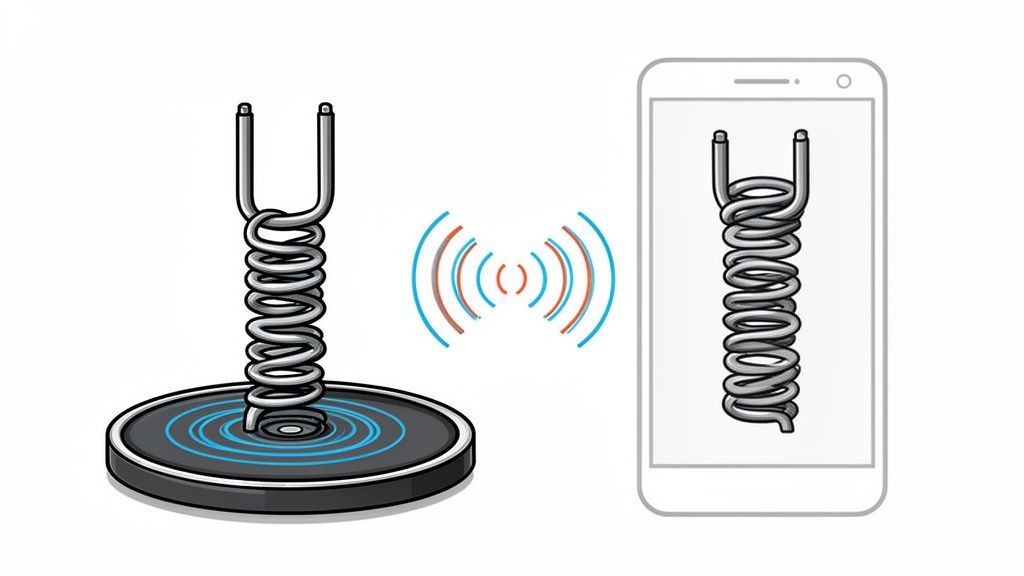
Before we can address whether wireless chargers are safe, it helps to understand how they work. The science behind it is quite simple, based on a principle called electromagnetic induction that has been around for almost 200 years.
Your charging pad and your phone each contain a special coil of wire. When you plug the pad into the wall, electricity flows into its coil, creating a small, controlled magnetic field. When you place your phone on the pad, this magnetic field causes the coil inside your phone to generate an electrical current that charges the battery.
This process requires no physical contact, just a contained energy transfer over a very short distance.
The Universal Standards: Qi and MagSafe Systems
This technology is not unregulated. It is carefully managed by strict standards to ensure everything works together safely and reliably. The most common standard is Qi (pronounced "chee"), which is managed by the Wireless Power Consortium.
When you see a Qi logo on a charger, it is a stamp of approval. It means the device has passed a series of tests to confirm it is safe, efficient, and will work with any phone that also supports Qi.
Apple took this solid foundation and built upon it with its MagSafe technology. MagSafe is essentially Qi charging with an added ring of magnets. These magnets ensure the charging coil in your iPhone and the one in the charger snap into perfect alignment every time.
This magnetic alignment is not just for convenience. Perfect alignment means a stronger connection, which reduces wasted energy that would otherwise escape as heat. The result is a faster, more efficient, and cooler charge.
This efficiency boost is a significant safety benefit. By keeping heat to a minimum, MagSafe helps protect your phone's battery and internal components from damage. If you would like to learn more, we have a full guide on how MagSafe charging works. It shows why sticking to certified, well-engineered equipment is the best way to ensure a safe and reliable charge.
Understanding the Health and Safety Risks
It is natural to have questions when you bring new technology into your home. With wireless chargers, two concerns usually come to mind: the electromagnetic fields they create and the heat they generate. These are valid points, but once you look at how certified chargers are built, you will see that your safety is a top priority.
The phrase electromagnetic field (EMF) might sound intimidating, but these fields are all around us every day. Your Wi-Fi router, the radio, and your smartphone all create EMFs to function. Wireless chargers do the same, generating a very small, low-power magnetic field to transfer power.
What is important is that the energy from a wireless charger is non-ionising radiation. This is the same harmless type of energy your Wi-Fi uses, and it does not have enough power to harm human cells. This is very different from ionising radiation like X-rays. In the UK, all electronics must meet strict EMF exposure limits, and certified wireless chargers operate well below these levels.
The Truth About Heat Generation
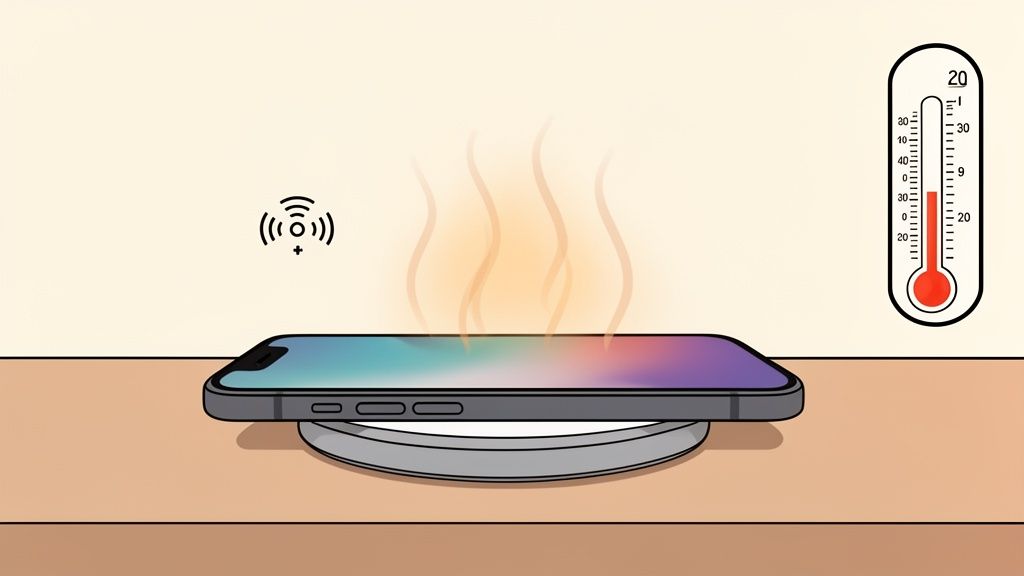
Any time you transfer energy, some heat is generated. It is a matter of physics. You have probably noticed your phone gets slightly warm when using a standard cable charger; wireless charging is no different. A little warmth is perfectly normal.
The key difference is between warm and hot. If your charger ever feels uncomfortably hot to touch, that is a sign of a problem. This is where the quality of your charger really matters.
A certified Qi charger is engineered with advanced safety mechanisms to manage temperature. These include built-in thermal sensors that constantly monitor heat levels and will automatically slow down or shut off the charging process if temperatures begin to rise too high.
This type of smart thermal management is a standard feature in any quality charger. It is there to protect both the charger and your phone from heat damage.
Why Uncertified Chargers Pose a Real Risk
Everything we have just covered about EMF safety and heat control applies to properly certified products. The problem is, the market is flooded with cheap, unofficial chargers that have cut corners on safety. They often lack proper heat sensors, are made from poor-quality components, and have never been tested to meet UK safety standards.
Poorly made chargers can overheat, cause electrical faults, and could even permanently damage your device. This is why sticking with reputable brands that clearly show their official certifications is the single most important thing you can do.
Does Wireless Charging Affect Your Phone's Battery?
A common question is, "Will wireless charging ruin my phone's battery?" It is a fair concern. You want convenience without sacrificing your device's lifespan. The truth is, the real culprit behind battery ageing is not the charging method—it is heat.
Any time you charge your phone, a small amount of heat is created. That is a normal part of moving energy from one place to another. The issue is that lithium-ion batteries, like the one in your phone, degrade much faster when exposed to excessive heat for long periods.
The myth that wireless charging is inherently bad for batteries comes from the early days or from cheap, poorly made chargers that were inefficient and generated too much heat. Modern, certified wireless chargers are designed from the ground up to manage heat and protect your device.
Smart Charging Protects Your Battery
A quality Qi-certified or MagSafe-compatible charger is engineered to be gentle on your battery. These are not just simple pads; they contain smart technology to keep temperatures within a safe range.
Here is what is happening inside a good charger:
- Thermal Monitoring: Tiny sensors constantly monitor the temperature. If things start warming up too much, the charger will reduce its power or pause until everything cools down.
- Smart Charging Algorithms: A certified charger communicates with your device to deliver the right amount of energy. Once your battery reaches 100%, it switches to a trickle of power or shuts off completely to prevent overcharging.
- Efficient Power Transfer: Technologies like MagSafe ensure the charging coils are perfectly aligned. This minimises wasted energy, and less wasted energy means less heat.
A well-made wireless charger can be a safer option than a cheap, uncertified cable that could fray or deliver an unstable current. You are investing in a more controlled and gentle charging process.
The real threat to your battery is not wireless charging itself. It is the poorly managed heat from uncertified, low-quality equipment. A certified charger is an investment in your phone's long-term health.
All batteries degrade over time; it is a matter of chemistry. This is influenced by your charging habits and heat exposure. It is interesting to see how similar principles apply on a larger scale by looking into how long electric vehicle batteries last. For tips specific to your Apple device, our guide on how to improve iPhone battery life has plenty of practical advice.
Why Certification Is Your Guarantee of Safety
When you see a small logo on a wireless charger's box, it is easy to ignore it as branding. Those symbols are much more than decoration—they are proof that the device has passed strict UK safety tests. Knowing what these marks mean is the best way to be sure you are buying a safe piece of equipment.
Suspiciously cheap, uncertified chargers found on online marketplaces are a gamble. They have not been through any official safety checks, which could mean they are built with poor-quality parts, have no way to manage heat, and offer poor electrical protection. Sticking to certified products is your first and best line of defence.
The Key UK Safety Marks Explained
In the UK, there are a few key logos to look for. Each one confirms something different about the charger's safety and quality.
-
Qi Certification: This is the gold standard for wireless charging. The Qi logo tells you the Wireless Power Consortium has tested the charger for efficient power delivery, temperature control, and ensuring it does not try to charge foreign objects like keys. It is your guarantee that it will work safely with your phone.
-
UKCA Mark: The UK Conformity Assessed mark is a legal requirement for many products sold in Great Britain. It is the manufacturer's declaration that their product meets UK health, safety, and environmental regulations.
-
CE Mark: This is very similar to the UKCA mark, but for products sold in the European Economic Area. You will often see both the UKCA and CE marks on chargers sold in the UK.
These certifications are not just stickers. They show that a manufacturer has invested the time and money to make a product that is safe, reliable, and legal to sell. Without them, you are taking an unnecessary risk.
The Dangers of Unverified Chargers
The difference between a certified and an uncertified charger is significant. Modern wireless chargers are packed with safety technology, like thermal sensors that prevent overheating and protection against power surges. They are properly tested to ensure any electromagnetic field exposure is well within safe limits.
Cheap, uncertified alternatives often skip all of that. This can lead to serious overheating that permanently damages your phone’s battery, or worse, becomes a fire risk. If you are interested in how electrical safety is managed more generally, looking into Portable Appliance Testing (PAT testing) provides an idea of the standards applied to many household items.
For a seamless and secure setup, a certified multi-device wireless charging station is a great option, letting you power up all your gadgets safely in one place.
Best Practices for Safe Wireless Charging
Knowing your charger is properly certified is essential, but how you use it daily also makes a difference. Adopting a few simple habits will keep your phone safe, ensure it charges as efficiently as possible, and provide peace of mind.
These are not complicated rules, just small adjustments to your routine that help the charger do its job properly, preventing common issues like overheating or slow charging. Follow these tips to get the best performance from your equipment.
Creating the Ideal Charging Environment
Where you place your charger matters, especially for keeping it cool. A well-placed charger is a safe charger.
-
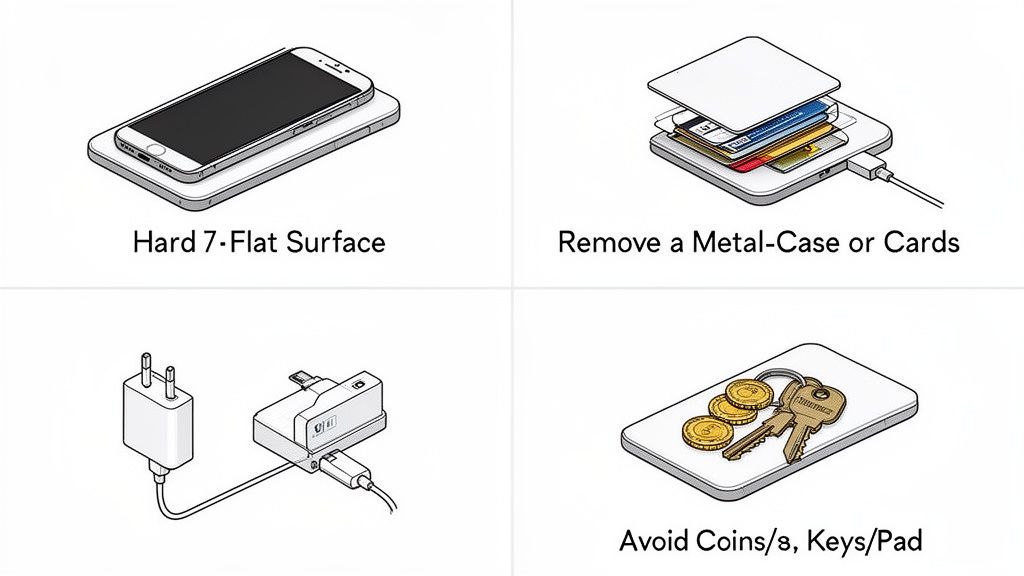
Find a Hard, Flat Surface: Always place your wireless charger on a solid, level spot, like a desk or bedside table. Soft surfaces like a sofa or duvet are unsuitable as they can block airflow and trap heat. This can force the charger's safety features to slow down or cut the power.
-
Keep It Clear of Clutter: Give the charging pad some space. Ensuring the area around it is clear allows air to circulate, which is key for dissipating the small amount of heat generated during charging.
-
Use the Right Power Source: Use the power adapter and cable that came with the charger, or one recommended by the manufacturer. Using an underpowered adapter can lead to slow, inefficient charging, while an incompatible one could be a safety risk.
What to Keep Off the Charging Pad
One of the best safety features in any certified charger is Foreign Object Detection (FOD). It is a system that shuts down power if it senses anything on the pad that is not a compatible device. This is why you need to be careful about what is placed on it.
Never place metal objects like keys, coins, or paper clips on a wireless charger. The charger’s magnetic field can induce an electrical current in these items, causing them to become dangerously hot.
The same applies to your phone case. If it has any metal plates, non-MagSafe magnets, or credit cards slotted into the back, remove it before charging. These can interfere with charging and generate extra heat. By following this simple advice, you can be confident you are using your wireless charger safely and effectively every time.
Your Wireless Charger Safety Questions Answered
Even after understanding how wireless chargers work, you might still have a few questions. Let us address some of the most common ones to clear up any lingering doubts.
Is It Safe to Leave My Phone on a Wireless Charger Overnight?
Yes. With a certified charger, this is perfectly safe. Your smartphone and a quality charger communicate to prevent overcharging.
Once your phone reaches 100%, the charger stops sending power or switches to a very low trickle charge to keep it topped up. This process is designed to protect your battery's long-term health.
Can a Wireless Charger Interfere With Other Electronics?
It is extremely unlikely. Wireless chargers use a weak, short-range magnetic field and are built with shielding to contain that energy. They are designed to coexist with your Wi-Fi, television, and other home electronics without causing any issues.
People often ask about medical devices like pacemakers. Certified chargers are rigorously tested to meet safety standards that prevent this kind of interference. However, the best advice is always to check the manufacturer's guidelines for both the charger and the medical device for complete reassurance.
Is Fast Wireless Charging Less Safe?
No, as long as you are using a charger from a reputable, certified brand. Faster charging generates more heat, but any good fast charger is built to handle it. They come with better cooling and heat sensors to manage the temperature.
If the temperature rises too much, the charger will automatically slow down or shut off to protect your phone. A certified fast charger is just as safe as a standard one—it just works more quickly. Those safety features are what you are paying for over a cheap, uncertified alternative.
At Cablenova, all our wireless chargers are Qi-certified and include advanced safety features. We build them to give you a reliable and secure charge, every time. Feel free to explore our collection of safe, high-performance charging solutions at https://cablenova.com.